
Pets Medicine & Supplements
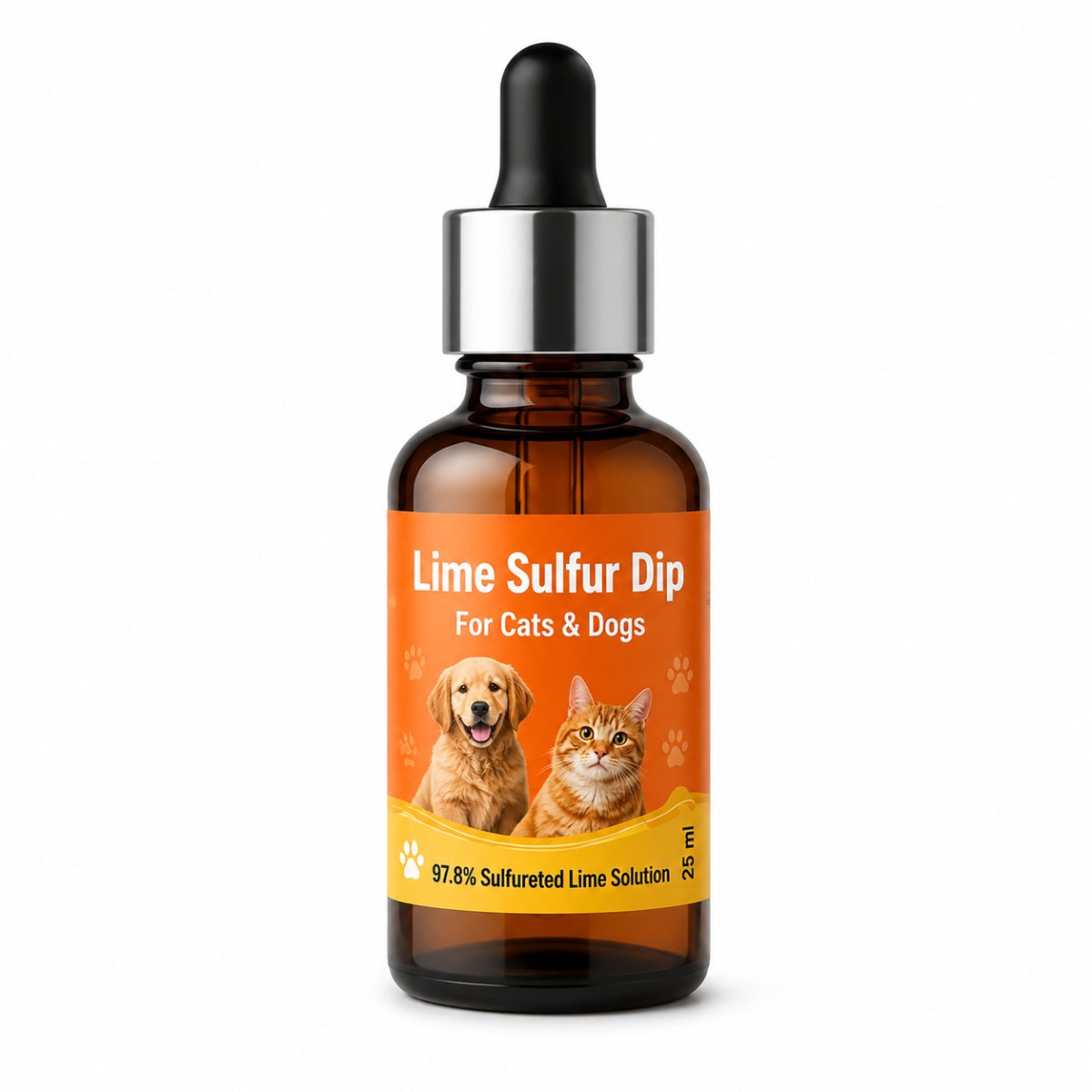
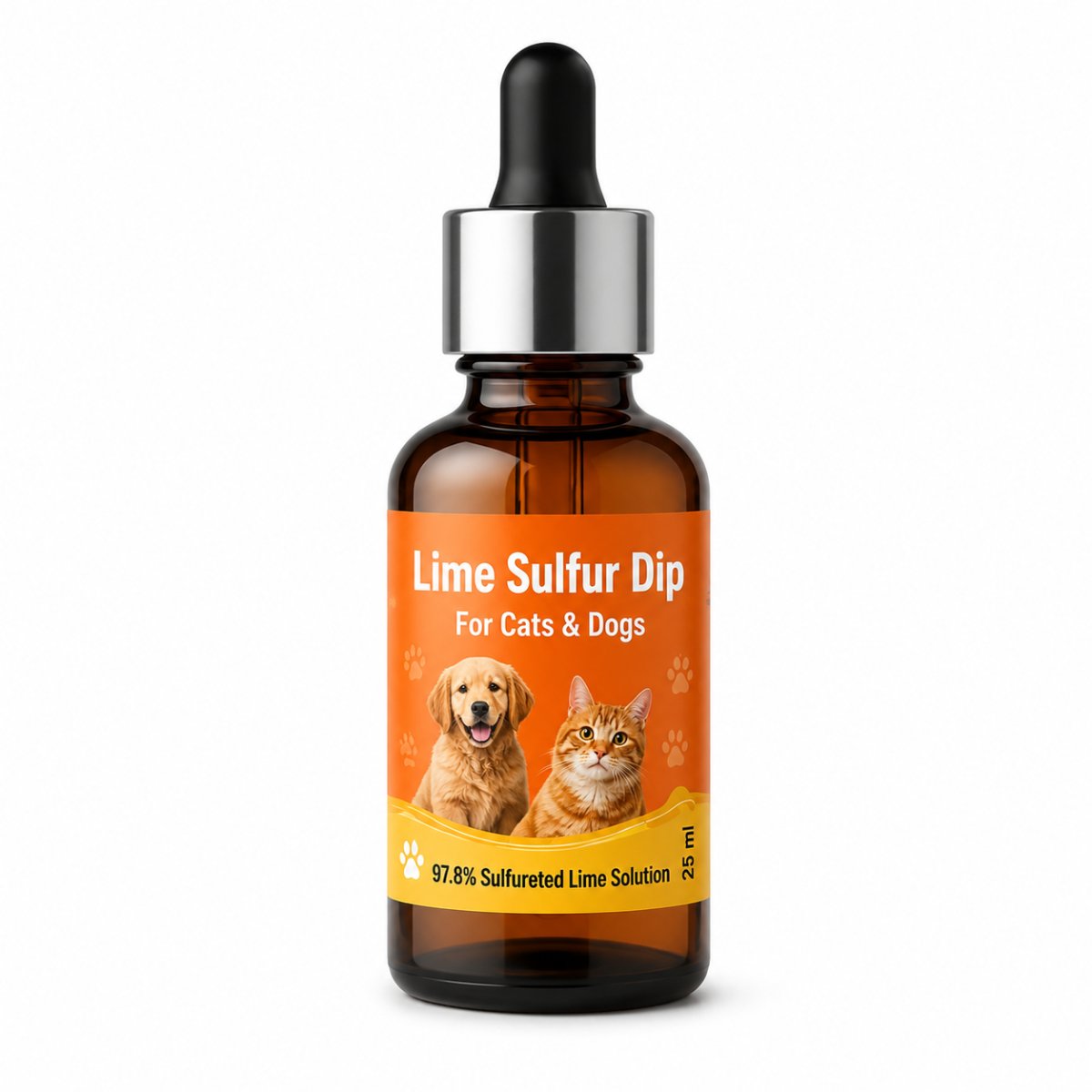
Lime Sulphur Dip (25 ml)
In Stock · 1306 PcsMore Effective against external parasites & Skin Infections.
25ml bottle with a free 100 ml spray bottle
Secure Payment
Easy Returns
Fast Delivery
24/7 Support
Description
Overview
Lime sulfur dip is a topical treatment for cats used to manage fungal infections, mange, mites, lice, and other skin conditions, applied as a diluted leave-on solution.
Uses and Benefits
Lime sulfur dip, also known as sulfurated lime solution, is primarily used to treat dermatophytosis (ringworm), topical yeast infections, and parasitic infestations such as Notoedric mange, Demodex mites, and lice in cats . It has antifungal, miticidal, antibacterial, and keratolytic properties, helping to kill pathogens, remove scales and crusts, and promote healing of affected skin It is safe for cats of all ages, including kittens older than 2–3 weeks, and can be used on nursing queens with precautions
Safety Considerations
Before using lime sulfur dip, avoid treatment if your cat:
- Was recently neutered or spayed (wait 7–14 days)
- Has open wounds or active eye/ear infections
- Is pregnant (stressful for queens)
- Is elderly or has mobility issues (use sponge application instead of full dip)
Always apply in a well-ventilated area, wear gloves and protective clothing, and prevent your cat from licking the solution to avoid oral irritation . The dip has a strong odor similar to rotten eggs and may stain surfaces.
Application Instructions
- Dilution: Mix the concentrated solution according to label instructions, typically 4–8 oz per gallon of warm water
- Application:
- Partially immerse the cat or pour the solution over the coat, ensuring it reaches the skin.
- Use a sponge or rag for the face, ears, and nose to avoid mucous membranes.
- Leave the solution on the coat; do not rinse or blow dry.
- Frequency: Repeat every 5–7 days or as directed by your veterinarian
- Post-treatment: Wipe nursing queens’ teats before allowing kittens to nurse. Use an E-collar if necessary to prevent licking
Practical Tips
- Pre-shampooing is recommended, but do not bathe after treatment.
- Avoid dipping multiple cats in the same solution to prevent cross-contamination
- Keep kittens warm during treatment and monitor for stress.
Lime sulfur dip remains a trusted, effective, and safe option for managing fungal and parasitic skin conditions in cats when used correctly under veterinary guidance
More Effective against external parasites & Skin Infections.<div>25ml bottle with a free 100 ml spray bottle</div>


